Stochastic Success
PUBLISHED 2026-10-08 | BY Jesse Pisel

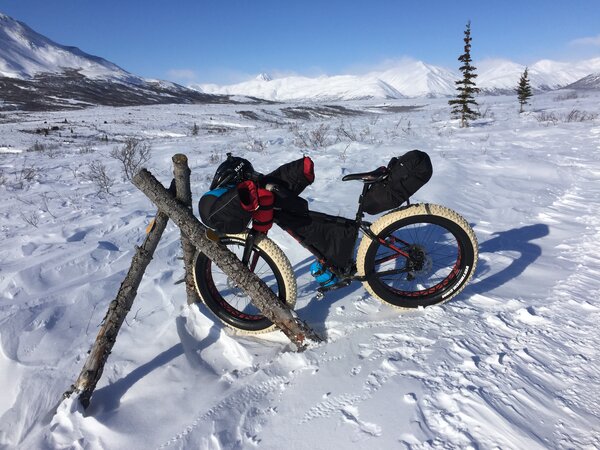
Photo by Jan Kronies on Unsplash
Grind, Luck and Success
It was -40°F out. 30 mph winds scoured exposed skin. 100 miles into my great winter adventure, on pace, on plan, executing months of preparation. I tested gear in subzero conditions. I dialed in nutrition. I studied the course. Then my rear tire goes flat.
The repair in the waning afternoon light eats vital time. My fingers and face, already numb from the cold, edge toward frostbite. By the time I reach the valley checkpoint, half a day later, race officials report carnage on the trail around me. Frostbite, overflow, open water, whiteouts. The psychology lesson is clear and harsh. Perfect preparation and relentless execution do not guarantee success. You can do everything right and still lose. Mental toughness alone is insufficient. Alignment matters. Luck decides.
Mental Toughness Without Alignment Accelerates Failure
The self-help industry sells mental toughness as a universal solvent, claiming perseverance alone conquers any obstacle. Psychological research tells a different story.
Mental toughness alone does not create success. Grind amplifies whatever direction you point. Point in the wrong direction, and more effort accelerates failure.
Angela Duckworth’s 2007 research on grit, published in the Journal of Personality and Social Psychology, shows perseverance and passion for long-term goals predict achievement. Her West Point study found grit the best predictor of completing Beast Barracks, outperforming SAT scores, high school GPA, and physical aptitude tests. Among National Spelling Bee finalists, grittiest contestants advanced further because they studied longer and with greater consistency, not because they were smarter.
But grit has limits. Duckworth herself admitted in a 2016 interview that many factors contribute to success beyond individual perserverance. She noted that money, social barriers, and other external constraints affect outcomes, meaning grit alone does not guarantee achievement. Did she grind to get her research results out there, did she have the resources to get published, did she know the right people, or did she get a lucky break?
Even worse, the sunk cost fallacy traps the grittiest individuals in failing endeavors. Having invested the most effort, they cannot admit it was misplaced. They keep grinding in the wrong direction because quitting feels like betraying their past self.
The formula requires more than effort. Apply effort in the right direction, toward solvable problems. Grinding only works when aligned with where you are actually headed.
Luck Decides
If alignment determines direction, luck determines outcome. That presents a key question. Can you influence luck?
Richard Wiseman’s decade-long study of 400 volunteers answers definitively: yes, but indirectly. His 2003 book The Luck Factor identified four principles that distinguish self-described lucky people from unlucky ones:
- Opportunity creation. Lucky people actively create, notice, and act upon chance opportunities that unlucky people miss.
- Intuitive decision-making. Lucky people trust their gut feelings to make better decisions.
- Self-fulfilling prophecies. Lucky people create positive expectations that unconsciously influence their behavior.
- Resilience. Lucky people adopt attitudes that transform bad luck into good.
The key nuance is that lucky people practice behaviors that maximize the probability of good luck, not guarantees. Wiseman’s lucky subjects experienced misfortune at statistically similar rates to unlucky subjects. The difference lay in how they positioned themselves relative to opportunity.
Consistent effort over time puts you in more situations where luck operates. The more you grind, the more lotteries you enter. But this only works when grinding aligns with meaningful objectives.
Consider SonReal. The Canadian rapper’s 2026 song-a-week proves weekly creation works. Releasing an unreleased track every week created weekly opportunities for discovery. But the alignment, creating music he genuinely believed in, working with his friends, and connecting directly with fans, made those opportunities valuable. The grind created quantity. The alignment ensured quality.
Extreme Sports Prove the Grind-Luck Equation
Extreme endurance sports provide a lab for studying the grind-luck equation. The competitors are elite, and all are well prepared. So the playing field levels as much as nature allows. Luck’s variance remains.
Lance Mackey’s career epitomizes the principle. He won the Iditarod Trail Sled Dog Race four consecutive times from 2007-2010, an unprecedented achievement that demonstrates exceptional capability. Yet in other years, he scratched due to health complications from throat cancer treatment and extreme trail conditions. Same athlete. Same effort. Same preparation. Weather changed. Snow conditions shifted. Dog health faltered. Luck turned. Effort alone does not explain the outcome.
Henry Worsley’s 2016 solo Antarctic crossing attempt offers a starker example. An experienced polar explorer with successful prior expeditions, Worsley prepared meticulously. But 900 miles into his solo crossing, his health began to fail. Luck decided the outcome, despite the processes. Mental toughness cannot repair failing health in Antarctica.
Reinhold Messner and Peter Habeler’s 1978 oxygen-free Everest ascent seemed scientifically impossible at the time. Their success proved exceptional preparation and mental toughness. But Messner also witnessed numerous friends die on Everest and other peaks from random avalanches, sudden storms, and falls. Same skill, same preparation, but timing shifted and conditions changed so the luck differed.
The pattern across these cases is effort creates possibility.
The Silent Graveyard of Grinders
If luck plays such a significant role, why do most people still believe effort alone determines success?
Survivorship bias. During World War II, analysts studied returning aircraft only, missing where enemy fire hit the missing ones. I’ll let you imagine the overused image of the fighter plane with holes in it that all data scientists know and love.
We study the winners and naturally assume their characteristics caused their success. We read their biographies and extract lessons about perseverance, passion, and hard work. We ignore the equally talented, equally hardworking individuals who failed due to circumstances beyond their control. The silent graveyard contains no memoirs.
In The Success Equation, finance theorist Michael Mauboussin distinguishes between skill-dominant domains and luck-dominant domains. In skill-dominant domains like chess, the best player wins consistently. In luck-dominant domains like entrepreneurship, investing, or endurance racing, the best performer wins only slightly more often than average and sometimes loses.
Mauboussin’s framework explains why the scratch rate is so high in some winter fatbike ultras. Half the field scratches due to equipment failures that cannot be prevented, weather events that cannot be predicted, or navigation errors in whiteout conditions that cannot be avoided. Perseverance alone cannot overcome these factors.
Effort still matters though. In luck-dominant domains, skill and preparation increase the probability of success. But the distinction between probability and certainty is key. The self-help narrative confuses increased probability with guaranteed outcome.
The Principles
Extreme endurance cases validate the psychology literature revealing three principles:
-
First, grinding is necessary to keep things moving no matter where you are headed. Mental toughness can get you through a lot of shit.
-
Second, grinding is only good when aligned with where you are actually headed. Misaligned grind is counterproductive.
-
Last, you cannot control luck, yet you influence your exposure to it. Reacting increases your luck.
A few key questions remain. When do you keep pushing? When do you quit? When do you try something different?
In Part Two next week, I frame success as a problem of alignment. Back-of-the-envelope calculations quantify the trade-offs between grinding on your current path versus reassessing your direction. I discuss how built-in realignment in Stochastic Gradient Descent algorithms prevents misalignment from trapping deterministic approaches. And I apply these ideas to real-world exploration strategies in geology and other fields.
The psychology explains luck’s role and how to position yourself relative to it. The mathematics defines actions to take.
TAGS: ai optimization psychology geology endurance case-study adventure