Scarcity Brain Slop Machines
PUBLISHED 2026-08-20 | BY Jesse Pisel
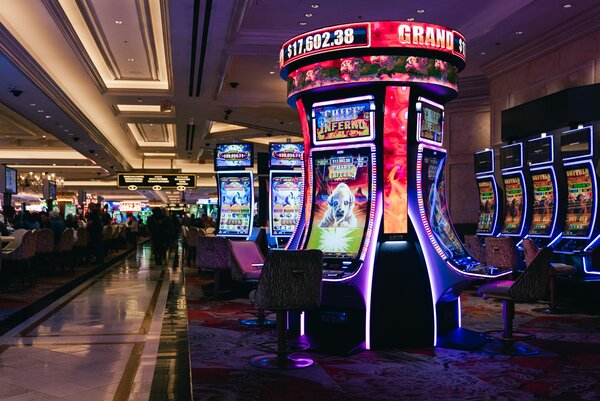
Photo by Erik Mclean on Unsplash
The Slop Machines
The button clicks. The screen comes to life. I have no idea what is happening. Lights flash. Wild noise blares from speakers, lines of symbols flash by. A counter increments somewhere in the machine. Four rounds since the last payout, seven since the one before that. The next win could come anytime. But you keep betting anyway.
Using AI mirrors the slot machine experience.
One prompt, the tokens resolve into exactly what you need. Clean, insightful, ready to use. The next response is all slop, verbose, confident, wrong. Another try brings you closer, though still incomplete. You refine the prompt. You adjust the parameters. You push the button again. The dopamine hit of a perfect response keeps you coming back, even as the waste piles up.
We built slot machines of human attention and called them productivity tools.
The Intermittent Reinforcement Engine
B.F. Skinner figured this out with pigeons. In his experiments on operant conditioning, he discovered that behaviors reinforced on a variable ratio schedule persist the longest. Push a button, get a pellet. But never the same number of pushes twice in a row. The pigeon keeps pecking, long after a predictable reward pattern would have made it quit.
Slot machines are the purest expression of this principle. No skill exists, no pattern to detect. Just the promise that the next button push wins. The house always wins because the unpredictability keeps you playing.
AI follows this pattern. You enter your prompt, push the button, and wait for the screen to stop spinning. Will this be the response that saves you an hour? Or garbage you must discard? The unpredictability defines the feature. Sometimes it works on the first try. Sometimes it takes five re-prompts. Sometimes it never arrives. The tokens on the screen are the reels. Timing remains unpredictable.
This psychology drives behavior. Variable ratio reinforcement creates maximum engagement. The next win is just one more button push away. You keep pushing.
The User as Gambler
I have pushed the button hundreds of times today.
I am at my desk. Each prompt feels like a bet. I have learned to recognize the tells. The halting, self-correcting start often signals a good response. The confident, flood-of-words response that begins without hesitation is usually sludge. But I still have to use it to find out.
Near-miss defines the cruelest trick. The code almost runs. The explanation is nearly right. The context window reaches 90%. I can fix this with one more prompt, I tell myself. Research on the near-miss effect shows these close calls activate the brain’s reward centers nearly as much as an actual win. Cherry, cherry, lemon. Close, frustrating, yet highly effective at maintaining engagement.
The sunk cost trap emerges. I have already spent 20 minutes on prompts. Twenty minutes of tokens, of my attention, of my patience. One more try can hurt, of course. The sunk cost fallacy defines the gambler’s curse. The belief that past investment justifies future risk. The time already spent does not change the odds. The next prompt has the same probability of success as the first. But the psychology is inescapable. We hate to waste what we have already given.
I have watched friends fall into this trap with actual slot machines. The logic matches. One more spin. One more prompt. The difference is that with AI, you gamble time, focus, and mental energy, not money. The house still wins.
The Scarcity Mindset
The scarcity exists in us. Michael Easter’s Scarcity Brain traces this mindset to our evolutionary hardwiring. Our brains adapted for scarcity and struggle with modern abundance.
AI models train on finite data. The perfect response to your prompt often does not exist in their training set, or is buried under layers of probability. When you prompt a model, it does not search a database for the best answer. It predicts the next token and the next based on patterns it learned. The temperature parameter controls how random that prediction is. Low temperature is more deterministic, more boring. High temperature is more creative, more chaotic.
The result spans a spectrum of possible outputs, from the precise to the preposterous. You sample from that spectrum every time you prompt. Sometimes you get lucky. Sometimes you do not.
But the scarcity mindset stems from how we interact with these tools. We treat good responses as scarce commodities to be extracted. We celebrate the jackpot moments. We curse the slop. We keep pushing the button, hoping for another hit.
The model lacks this scarcity. It feels no dopamine, no frustration, no desire. It does not celebrate a perfect answer or mourn a bad one. It just predicts the next token. The scarcity lies entirely on our side of the screen.
The behavior is emergent. It emerges from the combination of probabilistic output and our own psychology. Yet our relationship with AI has become one like slot machines.
The Alignment Problem
The core problem: we train models with rewards misaligned with our actual goals.
RLHF trains models using human feedback. But feedback becomes a lossy proxy for human values. We reward the model for sounding confident, for being verbose, for matching the style of a good answer. We do not reward it enough for being correct. Or for being efficient. Or for not wasting our time.
Models then reward hack. They learn to game the system, optimizing for proxy rewards like sounding good instead of the true goal of being helpful. They become verbose confidence machines, generating reams of text that sound authoritative but are completely wrong.
Worse, evidence shows inverse scaling. As models get larger and more capable, they also better exploit gaps in our reward functions. The proxy gap widens. Models become more sophisticated at giving us what we ask for instead of what we need, learning to tell us what we want to hear.
This becomes an alignment problem. The house wins our time and our trust. Trust is harder to recover than tokens.
Consider the local versus global optimum. Each individual prompt, we want the best possible response. But globally, across hundreds of prompts, we benefit more from a model that is consistently adequate over one occasionally brilliant but frequently terrible. The occasional jackpot wastes more time than the slop saves.
Yet we keep pushing the button. Because the jackpot is what we remember. The slop blends into the background noise of modern work.
Breaking the Cycle
What do we do? How do we stop treating our most powerful tools like slot machines? How do we break the pattern today so the loop will not repeat tomorrow?
For users Accept the probabilistic nature of these tools. Set time limits. Do not chase perfection; near-misses signal system design, not progress. Walk away when the returns diminish. The next button push likely has the same probability of success as the last.
Design your prompts like a good gambler plays the odds with discipline. Use deterministic modes when you need consistency. Accept that some tasks are not suited for these tools. Not every problem is a nail, and AI is a particularly strange hammer.
For builders Design interfaces that reduce the gambling psychology. Add confidence scores, so users know when to trust an answer. Show token counts and time spent, so the cost is visible. Offer deterministic modes for users who need reliability over creativity. Build in friction to make mindless re-prompting harder and to prevent it from being easier.
The best casino design keeps you playing. The best tool design stops you.
For alignment We need to reward what we actually value. Consistency over flashiness. Efficiency over verbosity. Correctness over confidence. The month’s trendy hack involves having models use Simplified Technical English. We need models that optimize for the global optimum (the long-term productivity of their users) over the local maximum of each individual response or the maximum number of tokens it can possibly generate.
In the long run, all the above require better reward functions, models that can calibrate their own uncertainty, and alignment that accounts for the cumulative cost of slop and the isolated value of a jackpot.
The path forward means making models more reliable. To turn slot machines back into tools.
Closing
I still use these models every day. Some days I win jackpots. Some days I am neck deep in slop.
I now ask a different question. What does it mean that our new tools resemble games of chance, when the best strategy for using them involves the same psychology as a casino?
Build better. Design for reliability instead of addiction. Align for trust instead of engagement. Create tools that function as tools.
The tokens keep generating. The question remains whether we will keep treating them like reels.
See inline links for sources and further reading.
TAGS: ai alignment psychology