The Bot Mess on Public Lands
PUBLISHED 2026-07-30 | BY Jesse Pisel
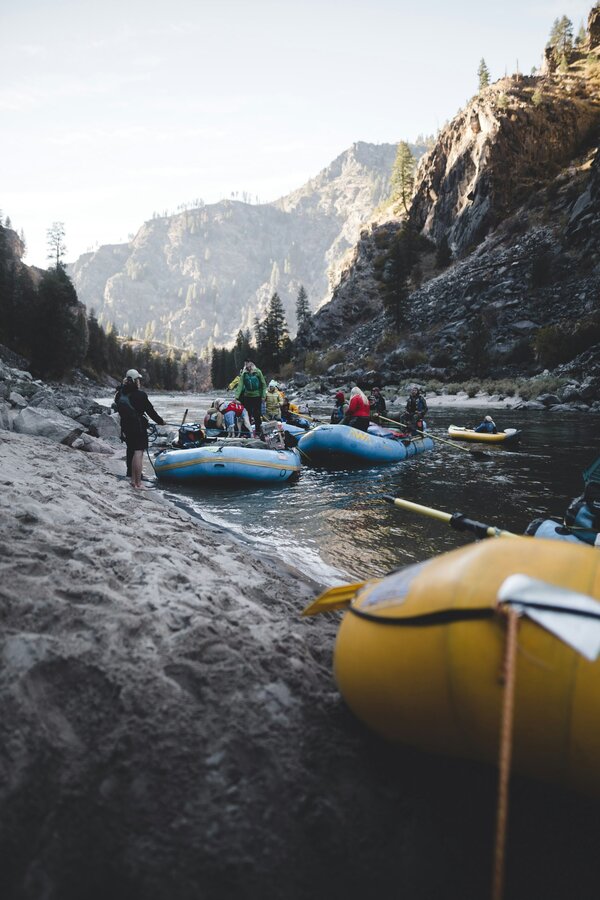
Photo by Brad Pearson on Unsplash
Sold Out
The clock snaps to ten AM Eastern. My finger hovers. Refresh. The screen floods with green. Old growth soaring into the mist. Rivers running clear over smooth stone. A dozen permits. I click. Click again.
Sold out.
Five seconds. All of them gone.
Wired pulled the curtain back. Two percent. Those are your odds for the good permits. For the best ones, it gets worse. The system promised fair access. The reality is a race where code always beats flesh.
First come, first served? Try first script, first served. Patience means nothing here. Processing speed decides all. The winners do not sleep under the stars they reserve. They move at the speed of light while the rest of us move at the speed of thought.
I have spent years leading teams that design AI competitions to resist gaming. What I know: When you reward the wrong behavior, the system breaks. The technology is not the problem. The rules are. And the fix is proven. Design the game so the only winning move is playing fair.
The Problem
No accident. Bad design causes it. Per Wired, a software engineer built an automated script as a weekend experiment. It seized a prime trip in seconds. Now those scripts spread across every outdoor forum.
The numbers tell the story. Reservations have tripled since 2019. That same broken system handles the load.
Drive any popular campground on a summer Saturday. Reserved signs flap over empty sites. Walk-up spots fill fast. No-shows hold online permits idle. The gap between digital frenzy and physical reality widens every year.
The current operator boasts industry-leading anti-bot measures in its FAQ. The claim rings hollow.
Access by Income
University of Montana research (Rice, 2022) confirms it. Reservation users come from zip codes with $6,000 higher median incomes than walk-in users. The rich get the access.
The system favors the privileged. Fast internet helps. A flexible schedule helps. No wonder those with the best connections clean up.
The incentives are broken. Partial refunds mean no real penalty for no-shows. EcoPortal reports rangers can only block email addresses after spotting a pattern. They cannot free up that first night. An automated reservation locks the gate even if no human ever arrives.
Those with the best technology enclose the commons. Those who need it most get left behind.
Profit From Volume
The current contractor runs the reservation system for public lands. They take a percentage of every transaction. The exact numbers are redacted, but Outside reports the system billed over $140 million from October 2018 to November 2022.
More transactions mean more profit. Human or automated, it makes no difference.
The lack of transparency compounds the problem. The contractor hides fees in fine print. Money flows through a black box. When profit comes per transaction, the incentives favor volume over fairness.
The Wrong Metrics
The system tracks automated attempts blocked. Not human access improved. It chases compliance, not outcomes.
The result is reactive. They detect automation after it has already succeeded. We need a system that makes cheating unprofitable from the first click.
Officials Are Responding
Legislators notice. Senator Alex Padilla’s RESERVE Act (S. 3775) would bring in experts to study fee structures and transparency. The Senate passed it in December 2024. The House failed to act. It returned in May 2025.
Senators Chuck Grassley and John Barrasso demanded answers in May 2023. How much do we pay the contractor? What are the fees? How much has the public been charged since 2017? We have limited answers from other lawsuits.
The courts act. In Thomas Kotab v. Bureau of Land Management (2022), a judge ruled the $2 processing fee required public input. Kotab won on procedure. The fees stayed. In 2023, a class action suit alleged the current operator charged junk fees, Wisconsin Watch notes. The court dismissed the suit. National Parks Traveler reports the answers why never came in full.
Legislation moves slowly. Technical fixes can deploy tomorrow.
The Fix
The core challenge is alignment over metrics. I wrote about this in Alignment in AI and Community Problem-Solving. The principle is simple. Optimize for what you want, not what you can easily measure. Look at the recent tokenmaxxing idiocy for example.
The solution to automated abuse follows our proven approach from AI competitions. Better rules, not bigger hammers. Intent over compliance and prevention over detection.
Rules Beat Surveillance
The AI competitions my team builds cannot watch every submission. So we use metrics that resist gaming. The approach applies here.
Do not chase every automated script. Rewrite the rules. Make cheating unprofitable.
Tie rate limits to human patterns, not IP addresses. Progressive delays on rapid requests penalize machines, not people. Shrink hold times. Hoarding becomes a gamble, not a strategy.
No Tracking Required
User tracking violates public lands principles. We do not need to know who you are to know you are not a machine.
Statistical anomaly detection works on request patterns, not user identities. Measure requests per second per session, not per user. Flag inhuman clicking speeds. A single script booking three permits in seconds across accounts triggers the brakes. Temporary delay, not lifetime ban. No fingerprinting. No tracking. No data retention.
No Crypto, No Heavy Tech
The solution runs without blockchain, zero-knowledge proofs, or ML. Simple. Effective. Light. Elegant rules beat heavy technology.
CAPTCHAs are surveillance. Modern versions like reCAPTCHA vacuum up device fingerprints and behavioral data to distinguish humans from machines.
We do not need identification. Prove you are planning a trip, not harvesting permits. Human patterns require no heavy tech.
Design for Intent
The competitions my team runs focus on what matters. The principle applies here. Every rule should serve the goal. Real people get fair access. A rule that catches automated scripts is good. A rule that also boosts human success is aligned with intent.
The Toolkit
Five techniques solve this exact problem. We use each of them in our competition designs.
| Technique | Mechanism | Outcome | Metric |
|---|---|---|---|
| Temporal Impossibility | Flag overlapping trips in distant locations | Catches automated scripts | % of detected networks via cross-region correlation |
| Rate Limiting with Memory | Progressive limits: 1/sec, 10/min, 100/hr | Automated throughput drops 83% | Automated success rate per 1000 attempts |
| Progressive Penalties | Escalating delays: warning to 5-min to 1-hr to 24-hr | Scripts make 5-10 reservations, not 60+ | Average automated session duration |
| Hold Time Adjustments | Shorter windows (5 min for hot permits) | Hoarding becomes risky | Hoarding rate = avg reservations held per account |
| Statistical Fingerprinting | Session-based anomaly detection | Detects automated behavior without tracking | Automated detection rate with zero false positives |
These five techniques work together. Automated systems cannot book overlapping trips across distant adventures. They cannot spam requests without triggering calm down delays. They cannot hoard permits indefinitely. And they cannot hide mechanical patterns from statistical analysis.
The key insight we have used for years. None of these require tracking individuals. They work on transaction data alone. The system becomes self-policing through clever design, not surveillance.
Implementation
What Changes Tomorrow
We need six changes. These are our proven targeted fixes from our competition designs.
| # | Change | Description |
|---|---|---|
| 1 | Add request rate monitoring | Simple counter. No user ID required |
| 2 | Implement progressive delays on rapid requests | The calm down penalty |
| 3 | Implement simultaneous reservation limits | Caps active reservations per account |
| 4 | Add shorter decision windows for high-demand permits | 5-minute limit |
| 5 | Add session-based anomaly detection | Flags impossible patterns |
| 6 | Publish transparency report on automated attempts | Builds public trust |
These are simple code changes. No new infrastructure. No new dependencies. The heavy lifting is in the rule design, not the implementation.
Expected Outcomes
The data is clear. Humans currently have a 2% chance at the best permits. The fixes would level the playing field, with human success rates improving significantly while automated abuse becomes far less profitable.
Sophisticated scripts will still game the system, but the economics shift dramatically. Running automated networks becomes more costly while the returns fall.
No-shows drop as shorter decision windows force quick commitments. As the income gap narrows, the system becomes fairer for all, including those with slower connections and less flexible schedules.
The system won’t be perfect. But it becomes measurably and dramatically better than today.
The Bigger Picture
Public lands represent a commons, not a commodity. The original commons. The original shared resource. Throughout history, we solved commons problems using these fundamental concepts. Clear rules. Fair access. Aligned incentives.
Good system design beats surveillance. The competitions we run prove you do not need to watch every contestant to run a fair contest. You just need rules that make cheating unprofitable.
The current approach to this reservation system invites exploitation. We know how to design that vulnerability out of existence. Follow the intent of the idea. Fair access includes the spirit of the law.
Closing
I will keep fighting for that permit. But the real win is fixing the system, not winning a rigged game.
The tools exist. We have used them for years. The principles are clear. The evidence that the current approach is broken is overwhelming. These techniques that make our AI competitions fair can make this reservation system fair. Not theory. Proven methodology.
What You Can Do
If you agree the system is broken, you can take these three concrete actions.
-
Contact your representatives. Ask them to support legislation that demands transparency and fairness in public land reservations.
-
Contact the system administrators. Demand they publish metrics on automated attempts, detection rates, and human success rates.
-
Share your stories. The more people who speak up, the more difficult it becomes to ignore.
The fixes are simple. The barrier is attention.
TAGS: public-lands alignment